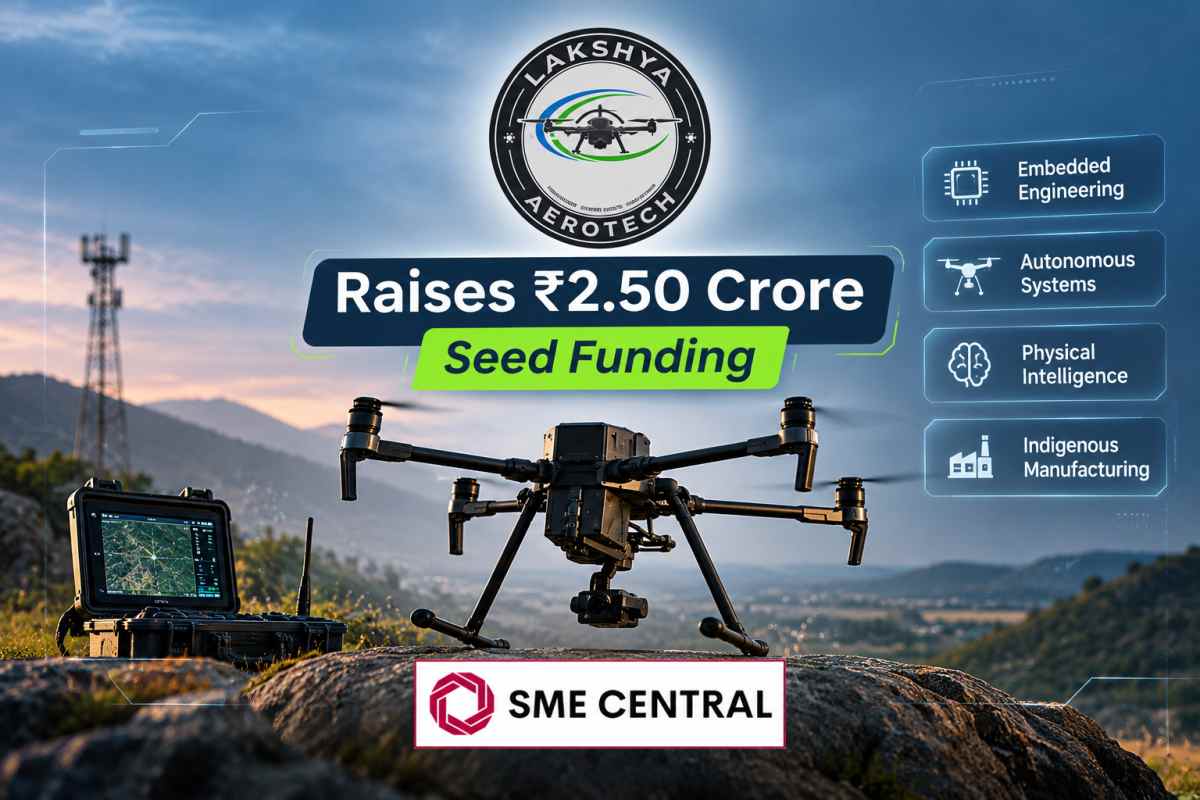
Deep-tech startup Lakshya Aerotech has raised INR 2.50 crore in a seed round from Santosh Kumar, promoter of Samkhyaa Group. The startup was founded last year by Lokesh Popuri and builds what it calls indigenous physical intelligence technologies, meaning systems that let machines sense their surroundings, make decisions and act on their own in the physical world. The company operates under the legal name Lakshya SmartGuard Systems Private Limited, and Lakshya Aerotech is the brand name it uses.
Lakshya Aerotech Seed funding comes from a single investor and will go into research and development (R&D), engineering infrastructure, product development and building up manufacturing within the country. The announcement does not mention the valuation, the stake sold, revenue or any customers.
Lakshya Aerotech Seed Funding Snapshot
| Detail | Information |
|---|---|
| Company | Lakshya Aerotech (Lakshya SmartGuard Systems Private Limited) |
| Founder | Lokesh Popuri |
| Founded | Last year (2025) |
| Focus | Physical intelligence, embedded engineering and autonomous systems |
| Funding amount | INR 2.50 crore |
| Round | Seed |
| Investor | Santosh Kumar, promoter of Samkhyaa Group |
Lakshya Aerotech: Business Overview
Physical intelligence refers to technology that lets a machine understand what is around it, decide what to do and then carry out the action without constant human control. A drone, a robot or an automated vehicle needs this kind of capability, and it combines sensors, control software and embedded electronics inside the hardware itself.
Lakshya works across advanced engineering, embedded intelligence and autonomous systems. The company’s aim is to turn its core technologies into products that customers can actually deploy, and to own the critical technology behind next-generation intelligent machines. Its listed focus areas are research, embedded engineering, autonomous control, intellectual property development and domestic manufacturing.
Use of Funds
Lakshya Aerotech seed funding is meant for four things:
- Research and development: Work on the core technologies behind autonomous machines.
- Engineering infrastructure: The tools and facilities needed to design and test hardware and software.
- Product development: Moving its technologies into commercially deployable products.
- Indigenous manufacturing: Building the ability to make its products domestically.
Santosh Kumar said he chose to invest because he believes in the team’s engineering capability and technology vision, and in its ability to turn new ideas into real products.
Also Read: Enterprise-AI Startup AidenAI Nets ₹297 Cr To Scale Enterprise AI Workflows
Bottomline
Deep-tech hardware startups need more time and money than software companies, and INR 2.50 crore is a small amount for building and testing physical products. The next signals to look for are the first named product or prototype, any pilot with a customer, and whether the startup raises a larger round from institutional investors once it has something to show.
Disclaimer: Based on company announcements and media reports. This article is for informational purposes; do not consider it investment advice.